
Building general purpose robots for hospitals
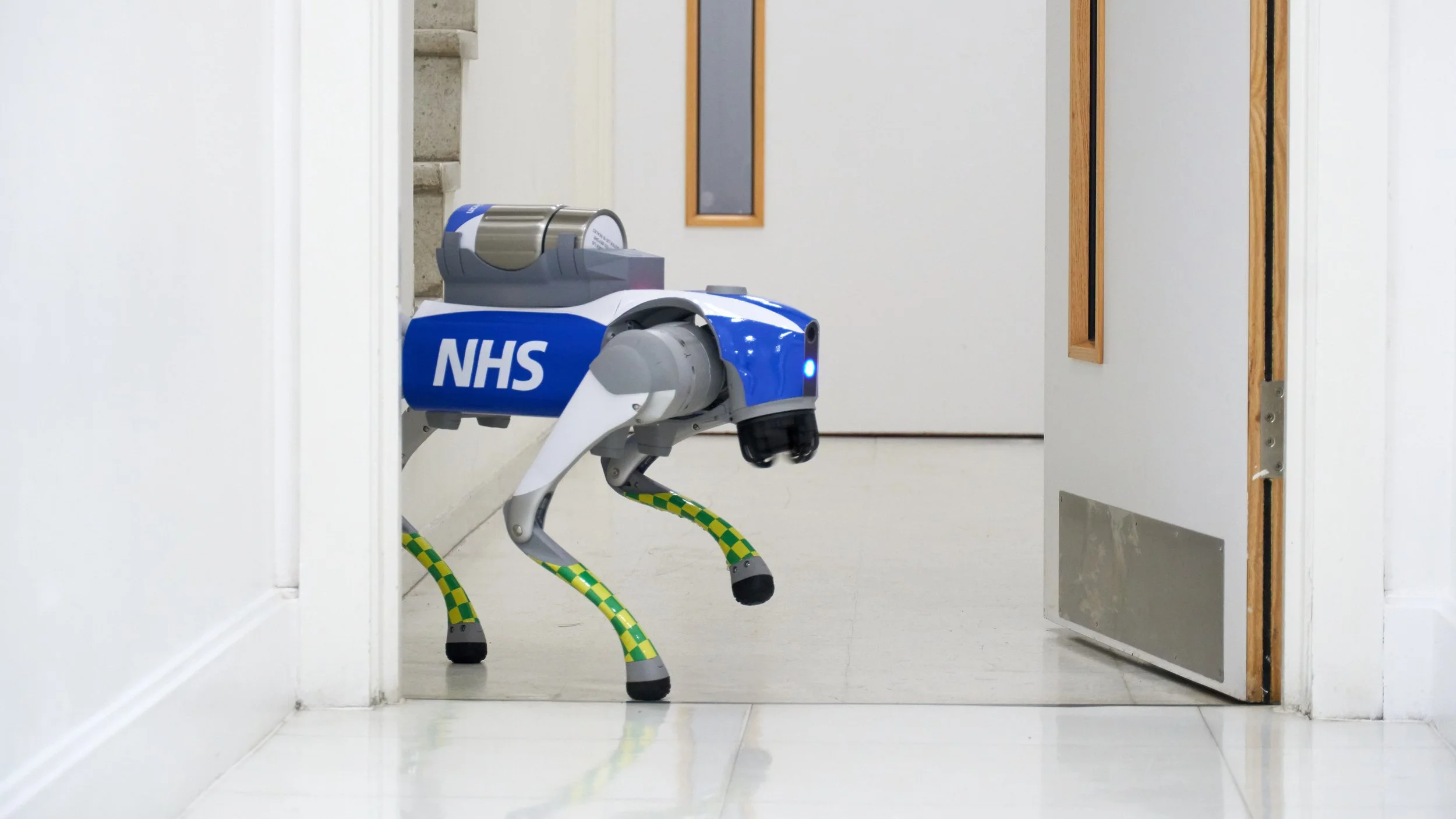
At Apian, we believe general purpose robotics will provide the radical productivity increase that healthcare logistics needs.
42% of NHS nurses spend more than half their time on non-clinical admin. Healthcare's most valuable resource, skilled clinical staff, is being wasted on work that can easily be automated.
Healthcare facilities are a perfect fit for robots that can operate in a world built for humans. In contrast to factory assembly lines (where task-specific robots excel) or home environments (too unstructured for robots to provide any value yet), hospitals are emerging as the leading use case for general purpose robots:
Structured environments with consistent corridor routing and variable obstacles (a deterministic problem with stochastic obstacles, our Engineering Director calls it)
Human-scale payloads, carried by hand, often by clinical staff
Legacy building infrastructure, where even minor structural changes to accommodate robotics would involve significant costs
There is huge value in being able to turn up and deploy a step change in logistics capability immediately, with no changes to the building fabric required.
We’ve experienced this firsthand for many years with drones, and we’re now seeing it with robots too.
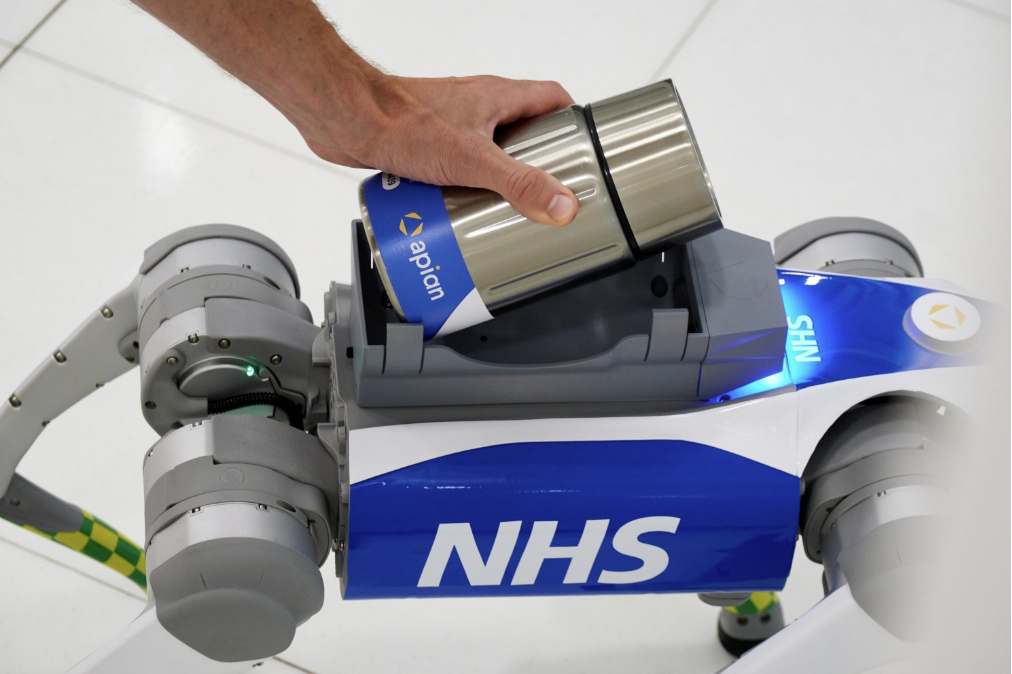
Pathology sample transfer with a quadruped
General purpose robotics are synonymous with humanoids. Despite recent advances in locomotion, perception, manipulation and physical intelligence, many humanoids are only just beginning to graduate from the lab. Today, there are currently no humanoids ready to deploy in a real project.
However, this doesn’t paint a full picture. Robots may be struggling to consistently interpret and manipulate the world around them. But the hardware and software needed for locomotion and navigation has reached a maturity and price point at which it’s ready for production. For intra-hospital logistics, this is a perfect match.
In theory all hospitals are fully accessible for wheelchairs, trolleys and beds. Why build legs if R2-D2 style wheels would suffice?
The truth is that in every hospital we’ve visited, the patient-facing areas may be accessible, but the logistics routes are not. Every hospital delivery arrives outdoors, whether by drone on the roof or van at goods-in bays. Service and utility areas often use underground corridors. Lifts are unreliable, ramps are everywhere, and stairs are a must.
We’re building a platform that’s drone and robot agnostic, capable of synchronising and automating many different types of hardware. But we’re also betting early on one particular archetype: four legs with wheels.
Stairs? No problem.
Legged wheels combine millions of years of evolution with the best of human ingenuity. Four legs are statically stable, easily carry 10-20kg payload, and handle obstacles on rough ground with ease. Adding a wheel to each leg makes them quieter, smoother, faster and more agile than legs alone. Counter-intuitively, wheels are also far superior at stair-climbing as the wheels roll smoothly over the edge of each step.
Legged robots are a form of AMR (autonomous mobile robot), a term synonymous with wheeled bots mounted with task specific hardware. Many hospitals have experimented with traditional AMRs in the past, but their inflexibility has been a significant barrier to wider adoption, confining them to specific routes prepared with extensive infrastructure modifications.
But legged robots are also a form of general purpose robotics, capable of traversing any terrain that humans can, and several that we can’t. Four legs with wheels are future-proofed for any journey on a hospital campus, and require zero modifications to the built environment to make this possible. In one pathology lab, we found deploying a robot capable of climbing just three steps would reduce the robot’s in-hospital journey from 15 minutes to 15seconds.
By investing in general purpose robotics today, we're not just solving current logistics challenges. We're building the foundation to scale and deliver tomorrow's autonomous healthcare systems too.
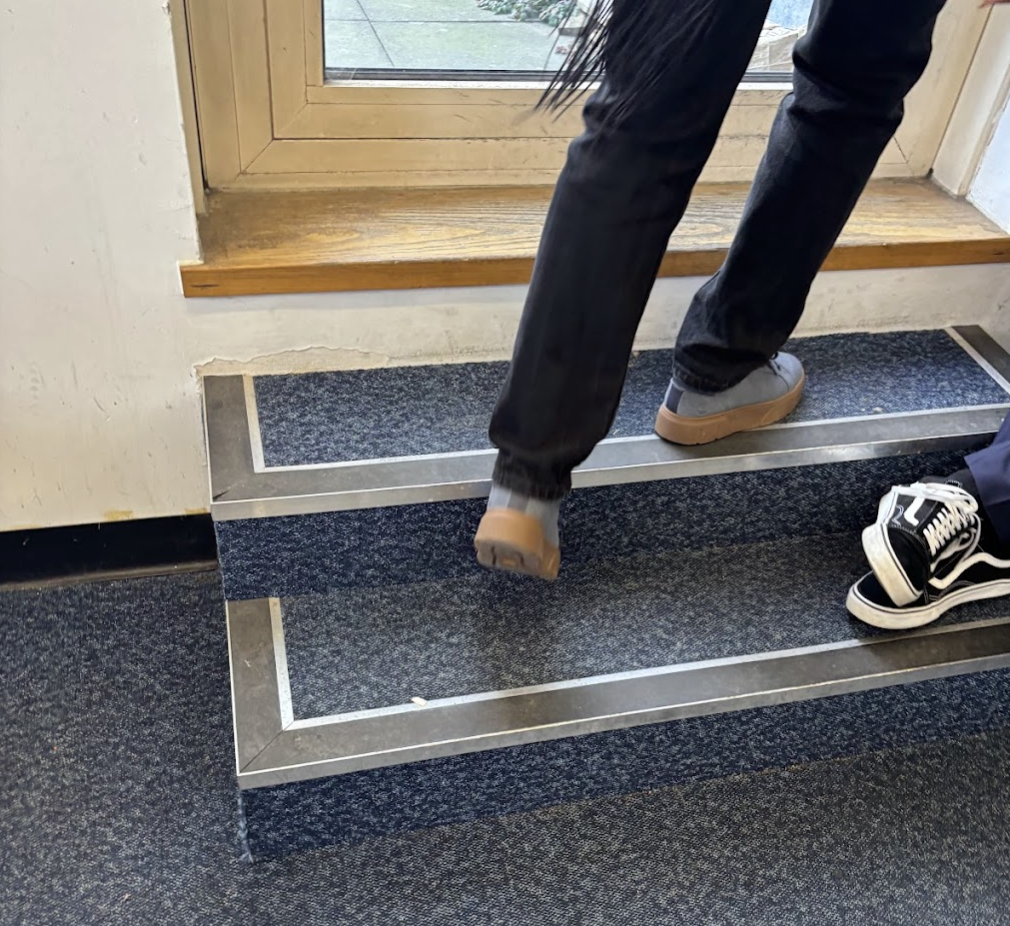
A robot that can climb these stairs will cut its journey time from 15 minutes to 15 seconds.
Written by George Cave
VP Robotics & Design, Apian
