
Collaboration creates a photorealistic digital twin to responsibly train, research and validate physical AI before real-world deployment in hospitals
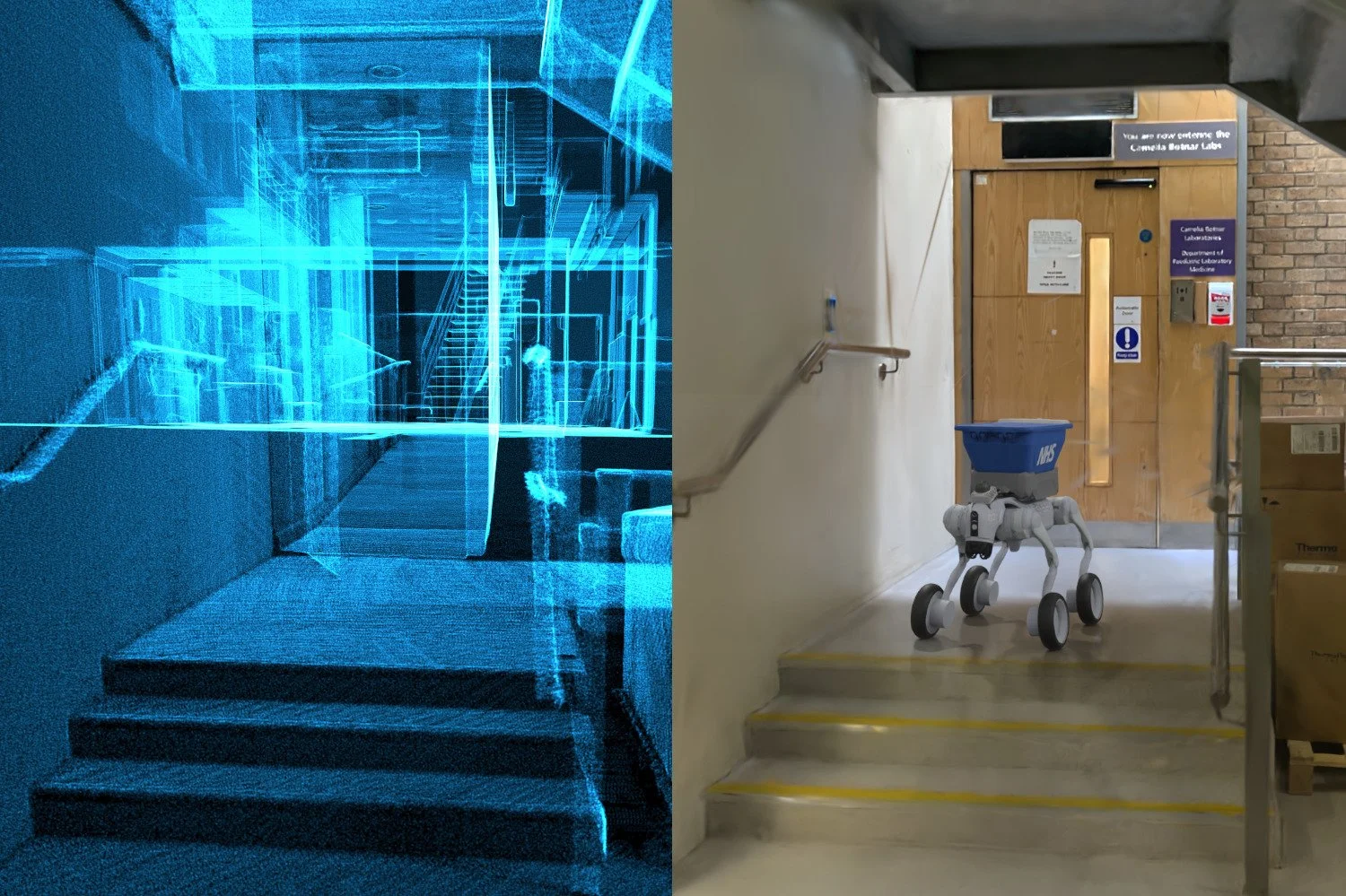
Left: Great Ormond Street Hospital digital twin, looking through closed door to see building structure within. Right: Apian robot navigates the simulated hospital environment.
London, 8 June 2026 - Apian today announced a project with NVIDIA to build high-resolution digital twins of NHS hospitals using Project Rheo, NVIDIA’s hospital automation blueprint within NVIDIA Isaac for Healthcare.
The initiative will enable physically accurate AI simulation, providing the foundational training and validation environment required to safely develop and deploy autonomous logistics robots across the NHS.
Preparing responsibly for the future
Hospitals of the future will rely on physical AI and robotics to manage complex, resource-heavy logistics. However, introducing autonomous systems into a clinical environment comes with unique physical, privacy and workforce considerations.
Apian is building digital twins of NHS hospitals to safely evaluate future robotic systems. The innovative technology is being explored with pioneering Trusts such as Great Ormond Street Hospital (GOSH) and Guy’s and St Thomas’ NHS Foundation Trust. The project will help define the standards and best practices for how these technologies can be integrated and scaled across the NHS in a responsible way. No patient data is captured and only the physical hospital spaces are replicated.
“This project addresses the physical AI deployment paradox. Autonomous systems need real-world experience to become safe, but they must be safe before they can gain real-world experience. By building photorealistic digital twins of NHS hospitals, we can break that cycle, proving these systems in simulation before they ever enter a clinical environment,” said Alexander Trewby, Co-founder and CEO of Apian.
Building sovereign healthcare robotics infrastructure
Using NVIDIA Omniverse NuRec, Apian will transform scans of hospital environments into photorealistic, physically accurate 3D digital twins suitable for robotics simulation.
Initial simulations will focus on the movement of pathology samples, blood products and medications through hospital environments, creating the foundation for autonomous systems that can safely transport critical healthcare items between laboratories, pharmacies and clinical teams.
This geometry is then brought into NVIDIA Isaac for Healthcare workflows, enabling Apian’s navigation models to learn the complex corridors and dynamic obstacles of a hospital entirely in simulation before deployment. As the NHS explores new technologies to meet growing demand, this digital infrastructure helps ensure that innovations can be developed, tested and integrated safely without disrupting patient care.
“As the healthcare sector faces unprecedented workforce demands and complex operational challenges, physical AI and autonomous systems are becoming essential to safely scale internal hospital logistics,” said Anthony Hills, Regional Director Enterprise Business, UK&I at NVIDIA. “Apian’s integration of the NVIDIA Isaac for Healthcare platform and NVIDIA Omniverse technology establishes a physically accurate simulation environment to securely train, test, and validate next-generation clinical robotics before real-world deployment.”
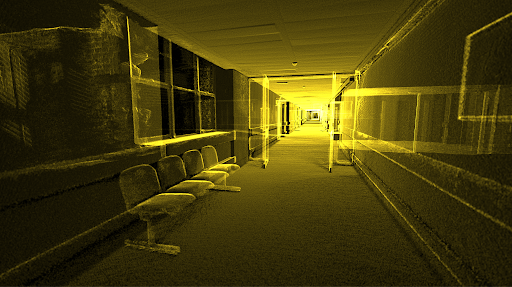
Looking through walls inside the GOSH digital twin.
The UK Government has prioritised the development of sovereign capabilities in critical technologies that support national growth, resilience and public services. This project helps ensure that the foundational infrastructure for healthcare robotics is built within, and for, the NHS.
Dr Nadine Hachach-Haram BEM, Director of Clinical Innovation and Strategic Partnerships at Guy’s and St Thomas’, said: “There is no better place to build sovereign AI capability than the NHS. By collaborating with Apian and by using advanced simulation technologies from NVIDIA, we are creating a world-class, risk-free testing ground that will take us closer to real-world deployments and, ultimately, help our staff do more of what they do best - provide outstanding care to our patients.”
By creating digital twins of NHS hospitals and developing healthcare-specific autonomy models trained on NHS environments, Apian is helping establish the technological foundations required for the safe deployment of physical AI across the healthcare system.
The next era of NHS logistics
For Apian, this project marks a critical expansion from pioneering outdoor medical drone networks to developing comprehensive internal robotic logistics.
This shift to automation is driven by an irreversible demographic shift. The UK is facing a rapidly ageing population combined with a declining birth rate, meaning there simply are not, and will not be, enough humans to meet the healthcare demand of the future.
The World Health Organisation projects an 11 million healthcare worker shortage by 2030, yet highly trained clinicians still spend countless hours moving samples and chasing results. They have become the “human middleware” that keeps the system processing more than 30 billion pathology tests globally each year.
Automating internal logistics is no longer simply an efficiency goal; it is becoming a workforce necessity required to keep healthcare systems functioning at scale.
By safely validating these indoor robotics systems in digital twins of hospitals today, Apian is laying the groundwork to automate internal hospital logistics tomorrow. If deployed at 50% of NHS hospitals in England, this robotic logistics infrastructure could free up enough clinical capacity to support more than 2 million additional inpatient interactions annually.
“The ultimate goal of physical AI in healthcare is not to replace human staff,” Trewby continued, “but to give them their time back to do the vital, empathetic work that only humans can do.”

