
Moving at the speed of clinical need
Sometimes, healthcare fails because we lack the science or the specialists.
But far more often, patients and clinicians are let down simply because the right item is in the wrong place at the wrong time.
A pathology sample is taken but misses the courier. A next-generation therapy sits on a shelf, waiting for staff to walk it across campus. A specific blood component exists, but it’s in a hospital fridge on the other side of the city.
This is healthcare’s overlooked physical layer - a broken system that forces modern clinical science to rely on Victorian engineering to move cells, medicines, and organs between the people and places that need them.
Physical AI, whether that’s medical drones flying over London, or autonomous robots navigating hospital corridors, can bridge that gap. We don’t care about this tech because it’s novel, we care because in medicine, even a minor delay carries clinical consequences.
This isn’t a futuristic concept, either. Apian has already delivered over 11,000 items by drone, ranging from routine biochemistry tests to specialised flow cytometry samples, blood products and chemotherapy. Meanwhile, our robots are at work on the ground inside hospitals and labs.
The sample is the patient
A sample isn't just a test tube in a plastic bag; it's a perishable extension of the patient that demands the same duty of care, and the clock starts ticking the moment the needle touches their skin.
Take a paediatric bone marrow aspirate. Collecting it requires putting an anxious child under general anaesthetic, and if you are testing for Burkitt’s lymphoma, those fragile cells begin dying the second they leave the body. Traffic, therefore, doesn’t just slow down care, it actively degrades the sample. So when it arrives too late, the failure isn't an "operational inconvenience", it’s that child undergoing a second invasive procedure, a missed diagnosis and wasted clinical time. Small delay; significant consequence.
Given the current landscape, it’s easy to look at autonomous drones and robotics and lump them in with military hardware abroad or consumer delivery at home. But here in the UK, we prioritised drone logistics for healthcare first, backed by a regulator who saw the value in putting the NHS first. This isn't about commercial convenience; it's about enabling healthcare professionals to give patients the care they need, when they need it.
With the combination of an ageing population, rising demand, compounding workforce shortages and the shift of care into the community, manual transport can no longer keep up. An intelligent logistics network of physical AI is a central part of the infrastructure required to scale patient care. We are building that network for blood - not burritos or bombs.
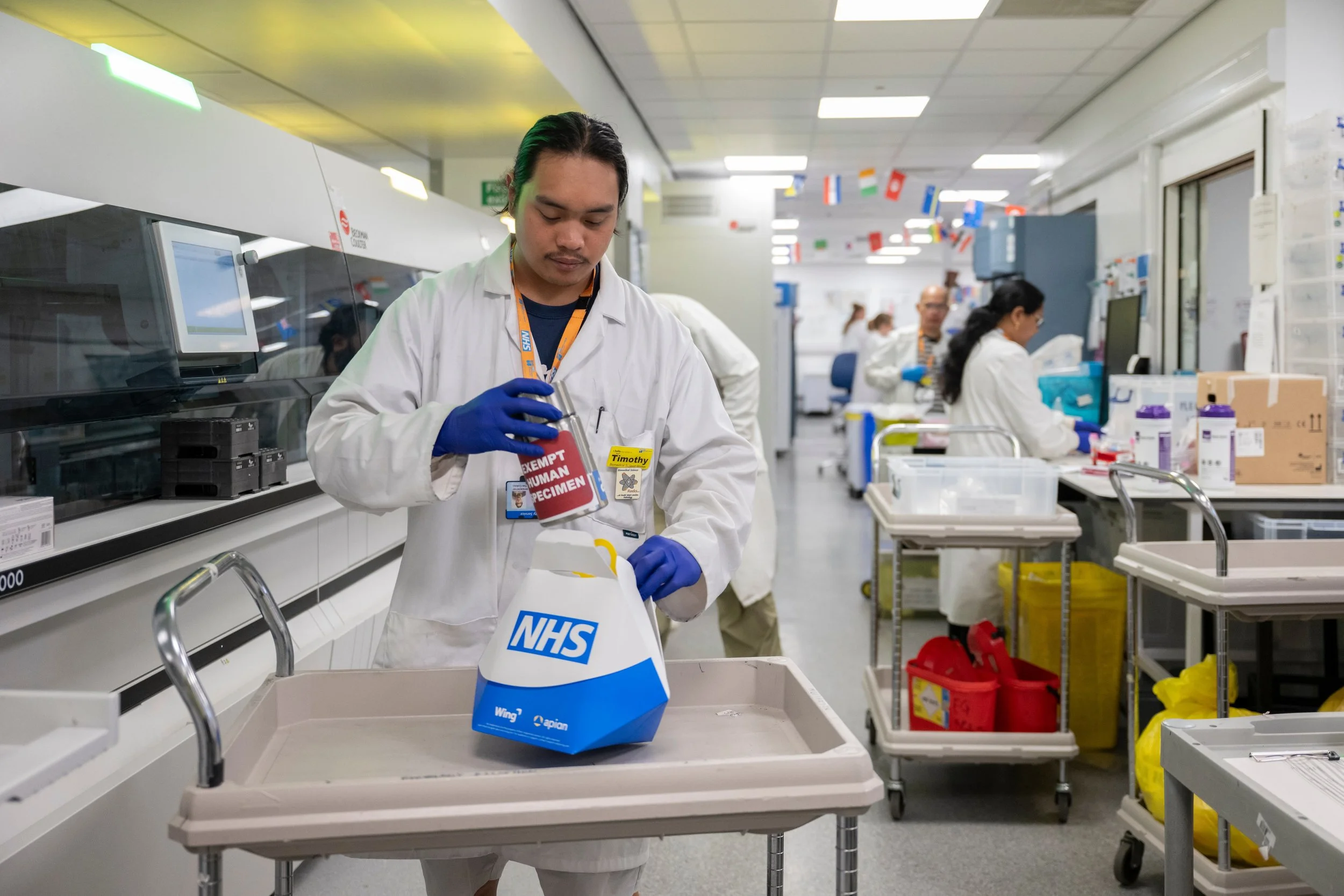
Precision medicine, precision logistics
Medicine continues to evolve at pace toward targeted, highly personalised care, making treatment faster and more effective. But precision medicine cannot run on approximate logistics.
Sometimes a sample can be a treatment as well as a diagnostic. At advanced cardiac centres, stem cells are harvested from a heart failure patient in the operating theatre. This living material is couriered across the city to a specialist facility, where the therapeutic cells are separated, washed and loaded into a syringe. It must then be raced straight back to be injected directly into the patient’s heart. There is zero margin for delay.
In intensive care, rapid metagenomic sequencing can now identify complex respiratory pathogens in hours rather than days, allowing clinicians to move patients off broad-spectrum antibiotics and onto targeted treatments. This improves survival, shortens ICU stays and curbs antimicrobial resistance. But that capability is wasted if the sample spends hours waiting to be picked up and then hours more stuck in traffic, pushing testing into the next day.
We live in a three-dimensional world, yet our logistics remain trapped on two-dimensional tarmac; the resulting friction restricts the clinical care we can provide. In a city like London, where expanding road capacity is a non-starter and a simple bridge repair takes years, relying solely on ground transport is a losing game. It’s a far smarter, greener, and more resilient strategy for patients, not to mention taxpayers, to harness our underutilised airspace for the NHS.
For an NHS facing a stark mandate to reform or die, changing how we move supplies isn't optional. True reform, especially decentralising services out of hospitals and into the community, stalls without a supply chain that moves at the speed of clinical need. The automated, on-demand nature of robotics, as well as the unmatched speed and sustainability of drones, puts ways of working on the table that were once implausible, allowing the NHS to better design care around patient need, rather than the physical limits of ground transport.
Humans for humans, robots for things
There is a narrative that automation is about replacing jobs. In healthcare, the truth is that automation can liberate humans to do human work and eliminate systemic waste of collective effort.
Right now, hospitals are using highly trained porters, nurses, scientists, and doctors as human middleware for a broken physical network. Every minute a doctor spends tracking down a missing sample or a nurse spends walking a chemotherapy batch across campus is a minute taken from important clinical activities. Every trip a porter takes carrying a sample to the lab is time taken away from moving an unwell patient to the CT scanner.
Healthcare staff shouldn't be burdened with manually tracking critical supplies, figuring out where they need to go next, and organising the legwork to move them across the network. Dynamically re-allocating short-shelf-life items like platelets or routing precious organs between sites to minimise expiration and ischaemic injury is an optimisation problem uniquely suited for autonomous systems. By reacting instantly to shifting clinical demand, responsive logistics builds true system resilience, ensuring resources are constantly positioned where they are needed most. It is a profound failure of design when a biological asset that has been selflessly donated, processed, and transported across the country - and the collective human effort involved in all of that - is ultimately thrown in the bin, not for a lack of human care, but because our manual systems were never built to manage that level of dynamic complexity.
Automated systems can remove the unnecessary friction that diverts staff attention from their patients and contributes to their burnout while providing the reliability and resilience a modern health system needs to survive.
After all, medicine is no stranger to automation. We already rely on sophisticated track systems and analysers in the lab and dispensing robots in pharmacies. Extending that intelligence to logistics isn't a radical leap, it’s just finishing the job.
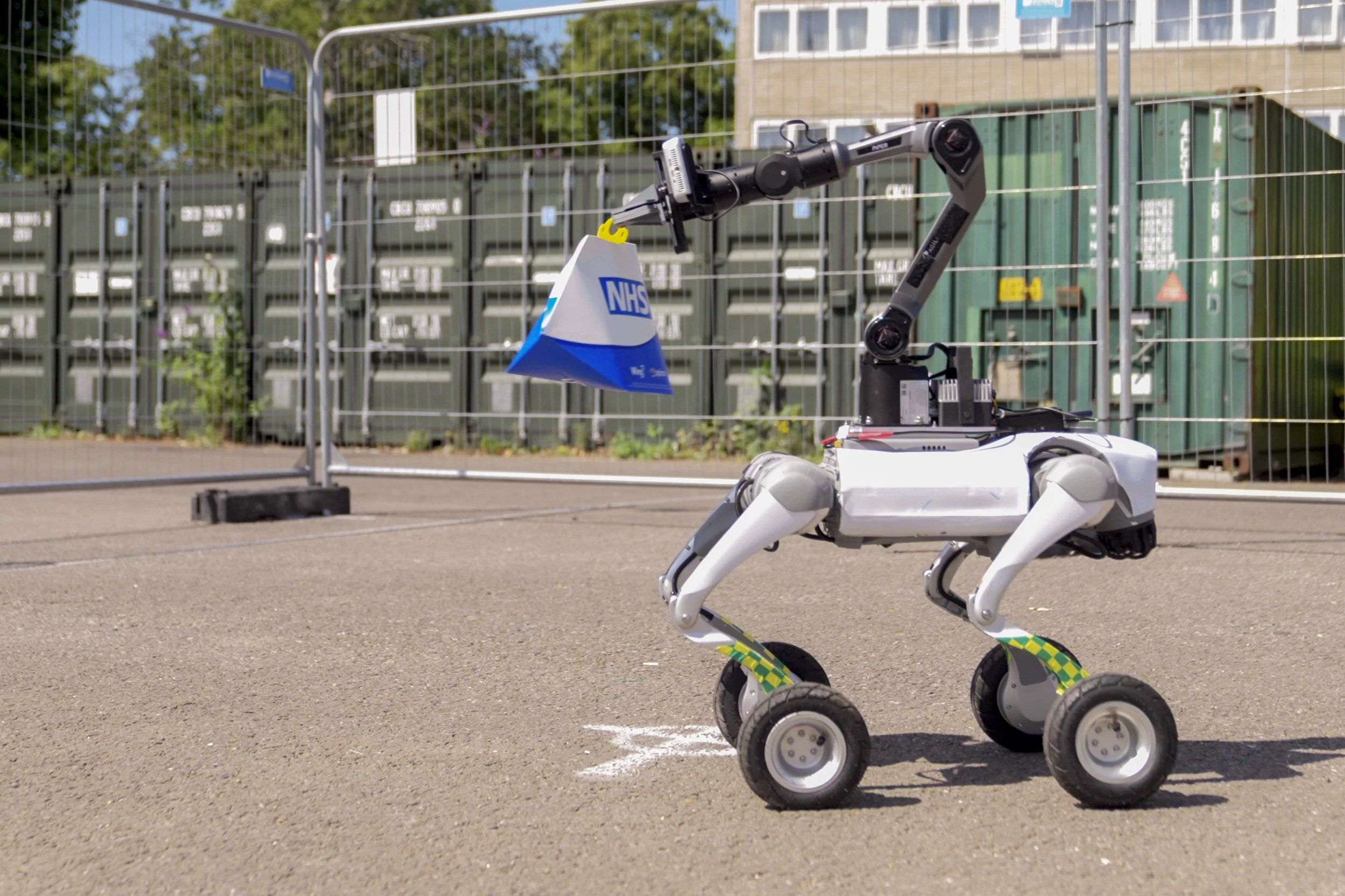
The vehicle is irrelevant, orchestration is everything
Whether a sample moves by drone, ground robot, robotaxi or traditional courier isn’t the point. Healthcare doesn't just need wings or faster wheels - it needs intelligent orchestration: a system that coordinates the physical world, understands clinical urgency and integrates directly into hospital workflows.
A critical troponin must go first. An urgent Haemoglobin S percentage shouldn’t sit behind a stack of routine full blood counts. A transplant drug level must arrive before the ward round.
Autonomous delivery is principally about removing uncertainty by making movement programmable, traceable, prioritised and reliable enough that clinicians can build care around it.
Modern medicine has spent decades pushing the boundaries of what we can diagnose, prevent and cure.
Now, the physical layer has to catch up.
