
Not all minutes are created equal
At Apian, we go to extraordinary lengths to make things move faster.
From the outside, the concept looks simple; a drone flies from A to B and saves 20 minutes. Couldn’t anyone strap a blood sample to a drone and fly it a few minutes away?
You wouldn’t believe how difficult it is to make this happen: aircraft technical capabilities, software integrations, airspace authorisations, NHS data governance, temperature-control validation, laboratory compliance, community sentiment - and plenty more.
So why bother? Is it really worth all that time, effort and money for a blood sample to arrive a little earlier?
The truth is in healthcare, not all minutes are created equal.
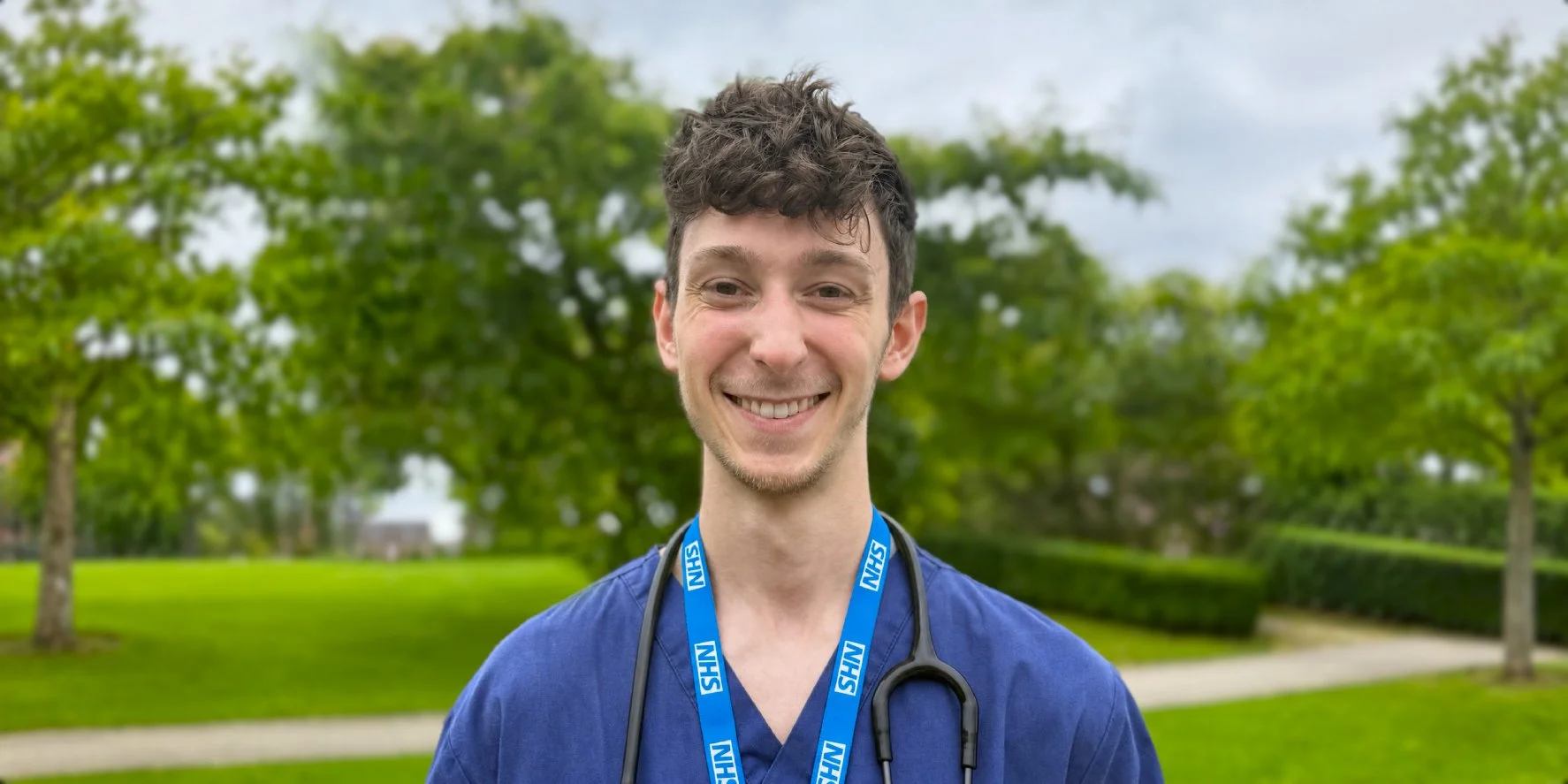
I’m a doctor for an NHS hospital in the North West, so whilst I lead validation at Apian, I actually spend most of my time on the receiving end of all this: ordering tests, waiting for results, and making decisions from them.
In this blog series, I get to explore what happens beyond the flight itself. Not just what we fly or how we do it, but why we fly it, and what actually changes for the patient because we do.
Because a sample arriving 20 minutes earlier doesn’t necessarily mean care happens 20 minutes faster.
So when are 20 minutes worth saving?
20 minutes becomes 20 hours
A few months ago, around mid-morning, a 22-year-old patient presented to the Emergency Department at one of our partner hospitals. Blood samples were taken for urgent testing at midday, and by 1:00pm the results of these tests were released, showing abnormally low numbers of red blood cells, white blood cells and platelets, a finding known as pancytopenia.
By 1:30pm, this patient’s blood is viewed under a microscope. “Blast” cells are seen in significant numbers - immature cells that are normally only present in bone marrow.
In a 22-year-old with pancytopenia, this is concerning. It points towards acute leukaemia: a life-changing diagnosis.
Acute leukaemia is a fast-growing cancer of blood cells, but it isn’t just one disease. Broadly, it has two different categories: acute myeloid leukaemia (AML) and acute lymphoblastic leukaemia (ALL). In order to choose the correct life-saving treatment pathway, a specialist blood test called immunophenotyping is needed.
And the nearest specialist laboratory able to run this test is around 30 minutes away.
And the last courier of the day leaves in ten minutes.
Even if the sample makes that courier, it will arrive after the laboratory’s cutoff, and will be processed on a busy morning the next day with a result almost 20 hours later.
This is unfortunately quite common across the NHS.
Humans talking to humans
Hospital systems allow us doctors to flag every test as either “routine” or “urgent”, but our systems, checklists, and processes often can’t account for the logistical complexity of specialist tests. Whether it’s an x-ray that requires the patient to drink contrast dye beforehand, an MRI scan that requires the patient to be under general anaesthetic, or a specialist blood test that needs to reach a specialist scientist before they go home, the “urgent” flag can’t possibly account for every test and the moving parts needed to facilitate it.
This isn’t hospital, or even NHS-specific. Healthcare systems are built on communication between staff: we phone the radiologist to ensure scans are prioritised based on clinical need. We give the blood bank a heads-up about an emergency on the ward, and the blood products that need defrosting. We phone and ask the specialist lab scientist if our sample will be analysed today. Behind every patient journey is a group of people talking to each other, and finding a way to do the most for our patients with the resources we have.
This communication allows healthcare to be surprisingly responsive. Information moves quickly between teams, and priorities change with it. But it breaks down when care depends on something physical moving between sites, particularly when the only link between them comes once every few hours, and can take over an hour to get there.
When it’s needed, everyone involved can respond to the urgency, except the transport: there is no blue-light ambulance for a blood sample.
This is a critical gap that Apian’s service is filling. A doctor can now request an on-demand urgent drone delivery in a few clicks, and suddenly the physical distance between patient and specialist has been reduced to just 2 minutes.
The outcome
This is a real patient case that was brought to us by the specialist scientists. A real person whose immunophenotyping waited almost 20 hours because the logistics chain was the only part that couldn’t dynamically prioritise.
The patient still received supportive and emergency care, but the result determining the correct acute leukaemia pathway only came back later the next day. Acute leukaemia can progress rapidly, and without the right treatment, patients can develop serious infection, bleeding, or other life-threatening complications.
Getting that result 20 hours earlier could have meant starting the right treatment a whole day earlier - potentially before one of these complications had a chance to develop.
Over the following weeks, we worked closely with that lab’s Special Haematology team to validate immunophenotyping and other similar tests for drone delivery.
Now, lab staff at the hospital can book an urgent on-demand drone delivery for these samples, and get them moved to where they need to be almost instantly. No waiting for the next courier, and a two-minute journey time.
Yesterday we flew 3 of them. The day before, we flew 2, and the day before that, 3.
These aren’t just samples arriving 20 minutes earlier; each one of these is a person.
A person who may be having the worst day of their life.
A person who is facing a life-threatening cancer.
A person who could have missed the cutoff and waited an extra day for answers.
But they didn’t. And that’s why we think it’s worth it.
Written by James Milne
Head of Validation, Apian
Resident Doctor, NHS
