
The power of a network
A while back I showed up for a weekend on-call shift and walked into an empty doctors’ room. Usually, even on a busy night, there’s at least a couple of doctors grabbing a few minutes’ sleep just before they hand over.
Empty is unusual - empty means something is happening.
I eventually found everyone on one of the wards. Doctors, surgeons, anaesthetists, porters, nurses, and inside the room, a patient who looked critically unwell.
The previous evening this patient underwent bowel surgery. Overnight, they started to deteriorate, and by the early hours of the morning they were found to have an internal bleed from an artery supplying the spleen - this can be difficult to spot during surgery.
When someone is bleeding heavily, we phone the lab and activate the Major Haemorrhage Protocol. Everything else takes a back seat as staff prepare red cells, plasma and platelets, and porters run them urgently to the ward. While we work to keep the patient alive and control the bleeding, blood packs keep coming until we tell the lab to stop.
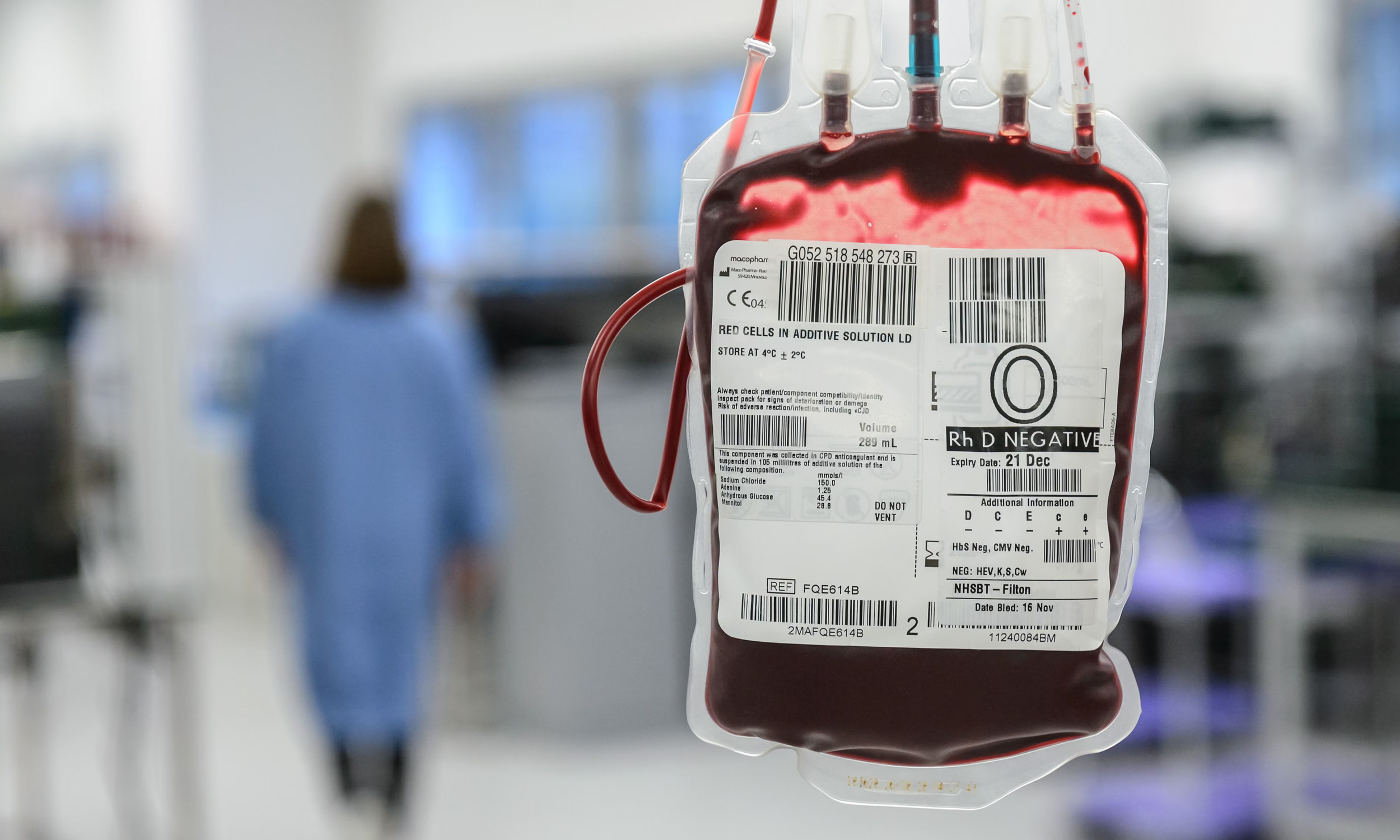
Photo: NHS Blood and Transplant
In a serious haemorrhage, you can use up blood products remarkably quickly. But unlike most supplies in a hospital, you can’t simply order more from a manufacturer. Every bag has to start with someone donating it.
A distributed supply
Every pack of blood in England is collected, processed and distributed by the national organisation NHS Blood and Transplant (NHSBT).
NHSBT aims to stock at least six days’ worth of each red blood cell type within their distribution centres at all times. That’s not easy: red cells last just 35 days, platelets only seven, and donation rates are unpredictable. Stock therefore fluctuates, often hovering below that target. In July 2024, O-negative blood stock fell to just 1.6 days, requiring NHSBT to declare an Amber Alert, and hospitals across England to restrict their use of O-type blood. Right now, there’s 4 days worth of O-negative blood.
Hospitals then order blood products from NHSBT to replenish what they use, and demand is unpredictable: a hospital might use very little of a particular blood type for days, then have a patient like mine burn through ten units in one go.
That creates a balancing act at both ends: NHSBT needs enough blood ready for distribution even when donation rates drop, and individual hospitals need enough on their shelves for whatever comes through the door. All without either holding so much that it all expires and goes in the bin.
One solution is sharing: if one hospital has excess blood and another is running short, moving packs directly between sites means each hospital can rely a little less on its own stockpile, and less blood expires on the shelf. However, with on-demand courier costs rising, challenges scaling blood bike services, and routine couriers not being reliable enough, this option is massively under-utilised: it’s too much effort and too expensive for sharing to be common practice.
Why drones?
The patient I’ve talked about thankfully survived. After receiving 10+ packs of blood, plasma, and platelets, they were taken to emergency operating theatres and had a life-saving procedure to stop the bleeding.
But I kept thinking, what would happen if there were another major haemorrhage half an hour later? Would we have enough blood on site? Would we phone a nearby hospital and ask them to send us some? How long would a courier take to collect it from them? How long would the patient have to wait before it gets to us?
Drones give hospitals access to an affordable on-demand logistics option for small, valuable payloads. Instead of waiting for a scheduled courier, or organising, paying for, and waiting for expensive on-demand vans, a drone delivery is cheaper, ordered at the touch of a button, and arrives almost instantly. Moving blood between hospitals becomes frictionless.
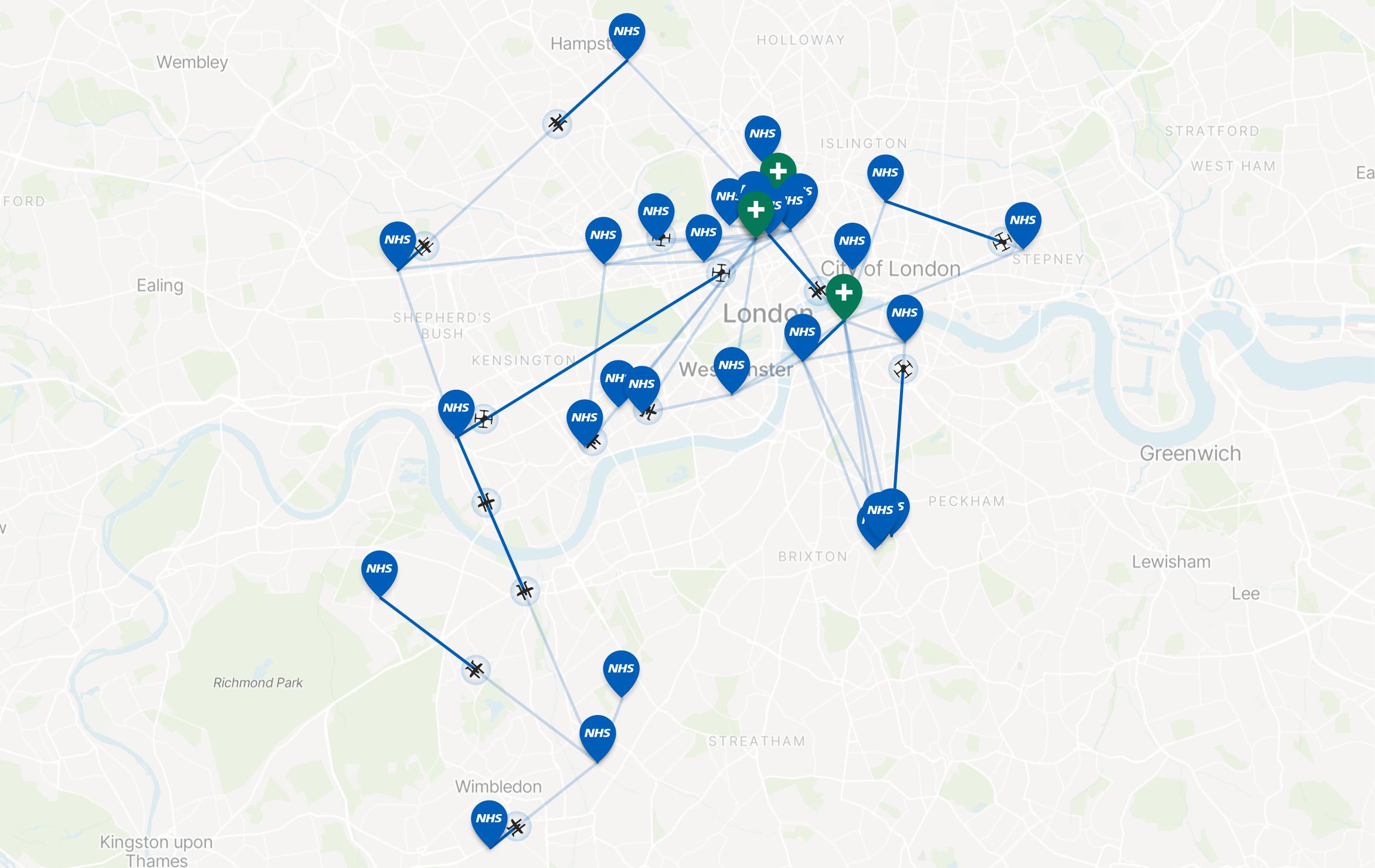
Of course, that only works if blood can safely be transported by drone. So we worked with NHSBT to study exactly that, and the results showed that it could. The next step is to put it into practice: flying a blood product between hospitals by drone and transfusing it into a patient - a UK and NHS first.
The significance goes beyond a single flight. As the network grows, the price of drone delivery is expected to drop further. Hospitals could start to think differently about where blood should be stored in the first place. It’s not just about faster logistics, we’re building a layer of national critical infrastructure that could fundamentally change stock management of blood products across the UK.
And blood is just the start.
The bigger picture
Blood is scarce, perishable and unevenly distributed. If this wasn’t enough of a logistical challenge, there’s another use case that takes these same problems to the extreme.
Organ transplants.
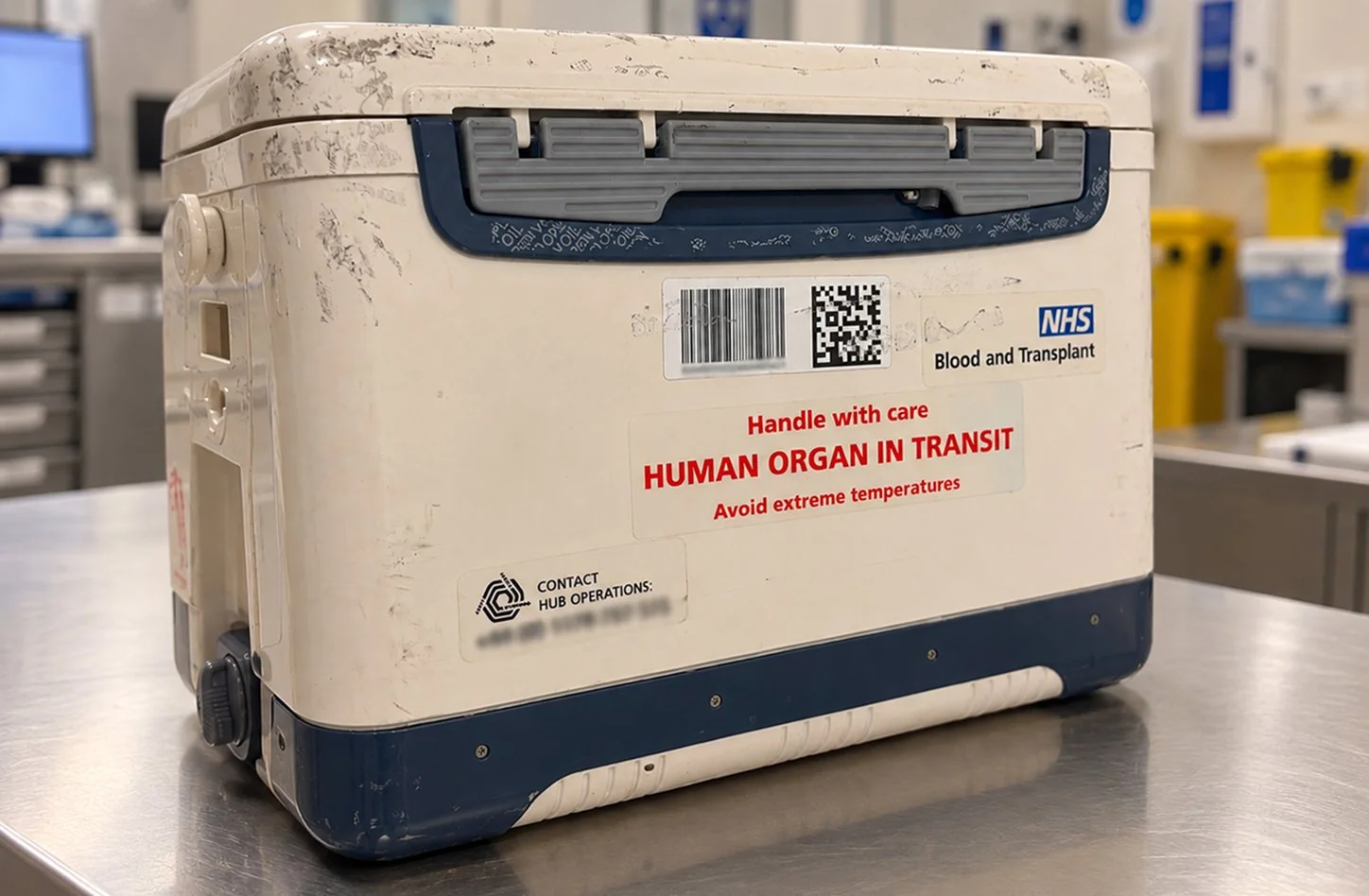
Donated organs rarely stay in the hospital where they were retrieved: a kidney recovered from a donor in one part of the country might be matched to a recipient hundreds of miles away - a recipient who’s waited years for that match.
And unlike blood, there’s no stockpile: that organ is unique, irreplaceable, and from the moment it’s retrieved, speed matters.
Suddenly the problem isn’t moving stock between hospitals. It’s getting something priceless from one specific person to another, across the country, against the clock.
It’s a problem almost designed for drone delivery.
And we’ll be putting it to the test sooner than you might think.
Written by James Milne
Head of Validation, Apian
Resident Doctor, NHS
